



European tanners, an example in the use of water 1

European tanners, an example in the use of water

Content published by: Lederpiel

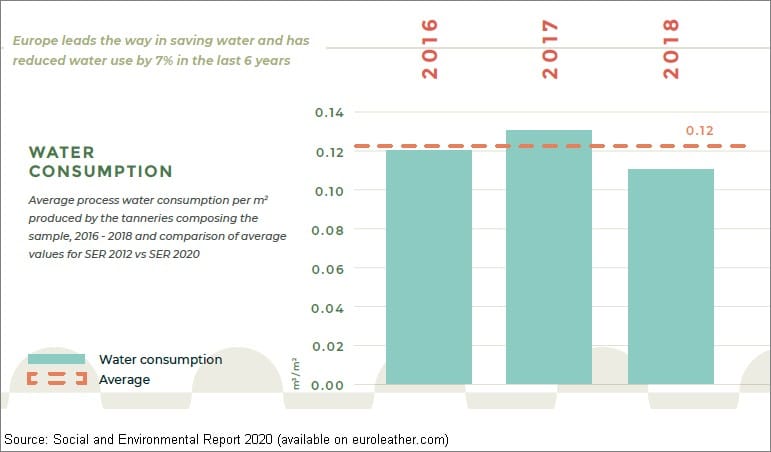
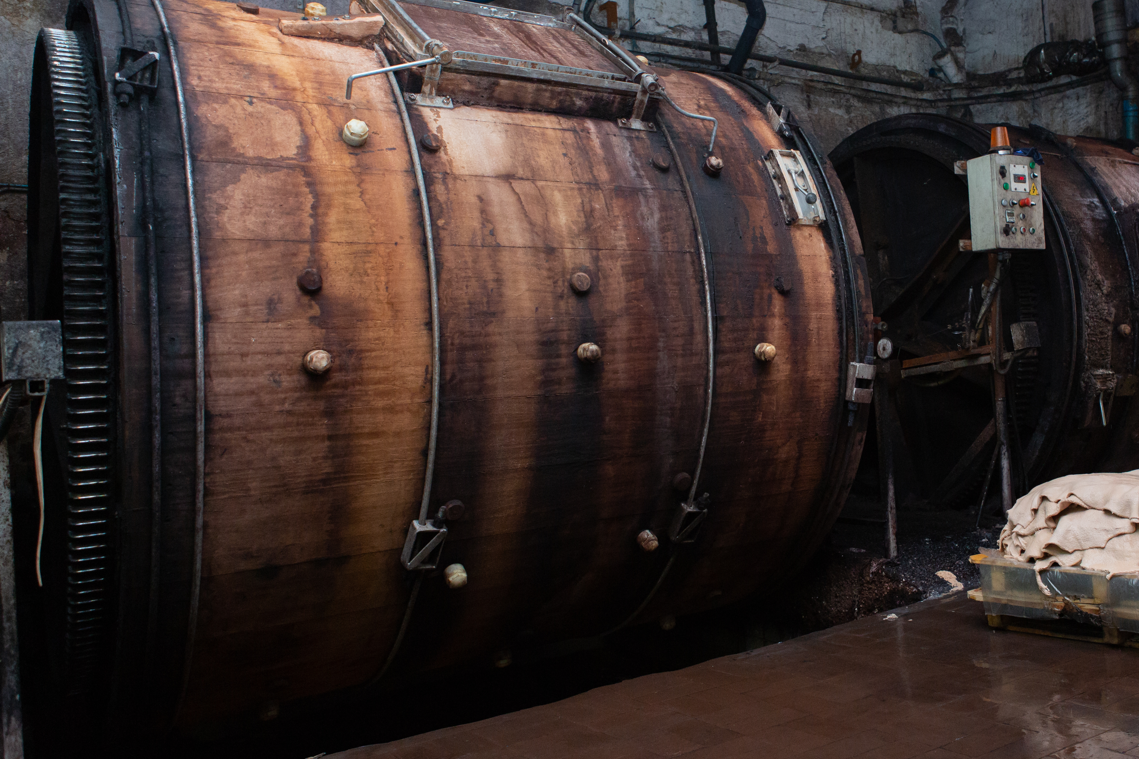
One of the main accusations that is usually made against the tanning industry by its detractors is the intensive use of a resource as scarce and precious as water. To produce leather, abundant water resources are required, mainly to clean animal skins of mud, manure and hair. However, it is not usually taken into account that the leather industry is one of the manufacturing industries that has made the largest investments in recent years to purify its effluents and give a new use to the water used.

In particular, the European leather sector is a pioneer in the application of innovative practices for the recovery of its effluents. As the Confederation of National Associations of Tanners of the European Community (Cotance) points out in its latest statement released in collaboration with the Spanish Tanning Association (Acexpiel), the environmental practices of the European tanning industry are “accredited by well-known audits in the sewage treatment”. According to Cotance, “in Europe, wastewater from tanneries is treated under very demanding parameters. Its effluent treatment plants demonstrate great technical excellence.”

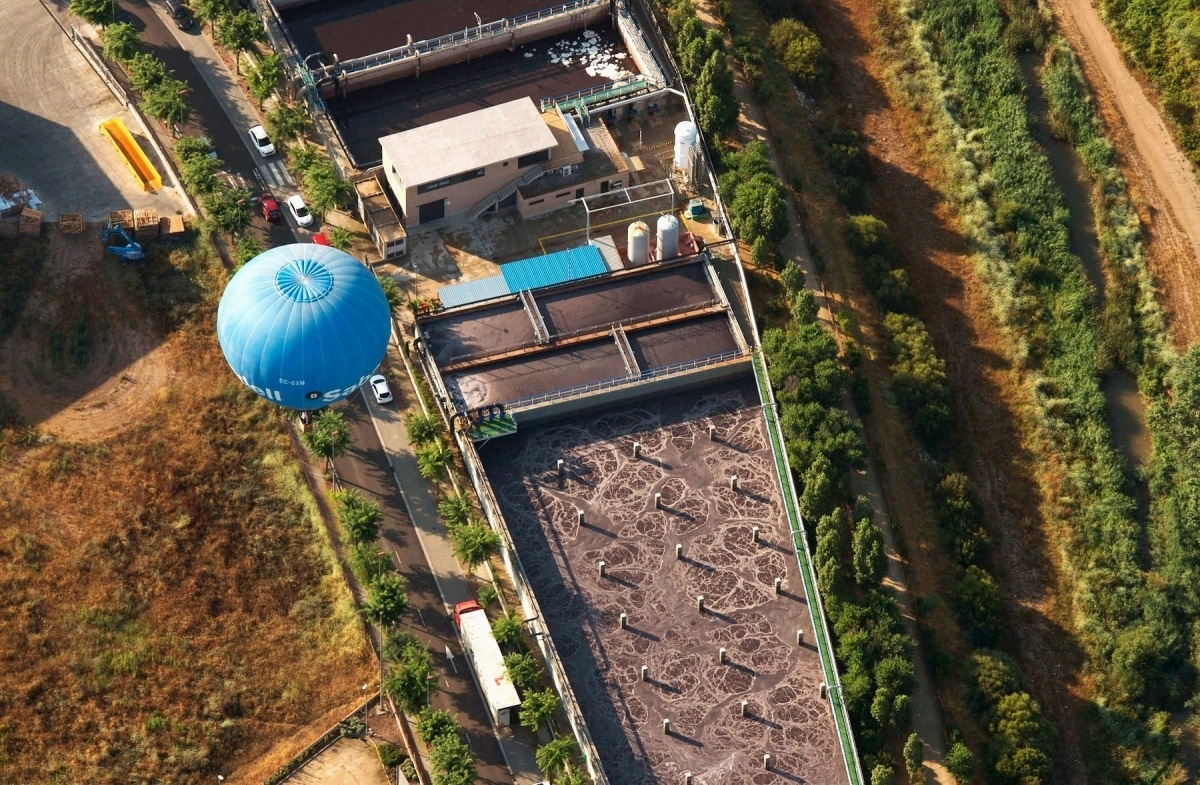
An example of this is the Italian plant for the treatment of effluents from the clusters of tanneries in Tuscany, Veneto or Campania, which has become an international benchmark for the management and treatment of water in industrial districts of tanneries. Another example is the Portuguese tanning district of Alcanena, which separately collects baths from partner tanneries to recycle residual tanning agents. In Spain, we have the example of the Igualadina de Puració i Recuperació treatment plant, which treats the water from twenty-eight tanneries in Igualada (Barcelona), as well as part of the local urban wastewater and that from other industries. At the end of an innovative biological system, water is obtained in conditions comparable to domestic wastewater, which guarantees an adequate return to the environment. Splenda Quality Leather is one of these tanneries.

Due to its unique characteristics, this treatment plant in Igualada has been the object of international recognition and one of the cases highlighted by the United Nations Environment Program (UNEP), as well as by the Global Water Intelligence report, a benchmark for the industry of the water.

As Cotance concludes, European tanners are “perfectly aligned with the United Nations Sustainable Development Goal (SDG) 6 (clean water and sanitation)”, and stresses that they are not stopping in their pursuit of “higher sustainability standards”.

You can access the original post HERE.
European tanners, an example in the use of water 3

Round table on the biodegradability of leather, organized by Leather Cluster Barcelona 5

Round table on the biodegradability of leather, organized by Leather Cluster Barcelona

Content published by: Leather Cluster Barcelona

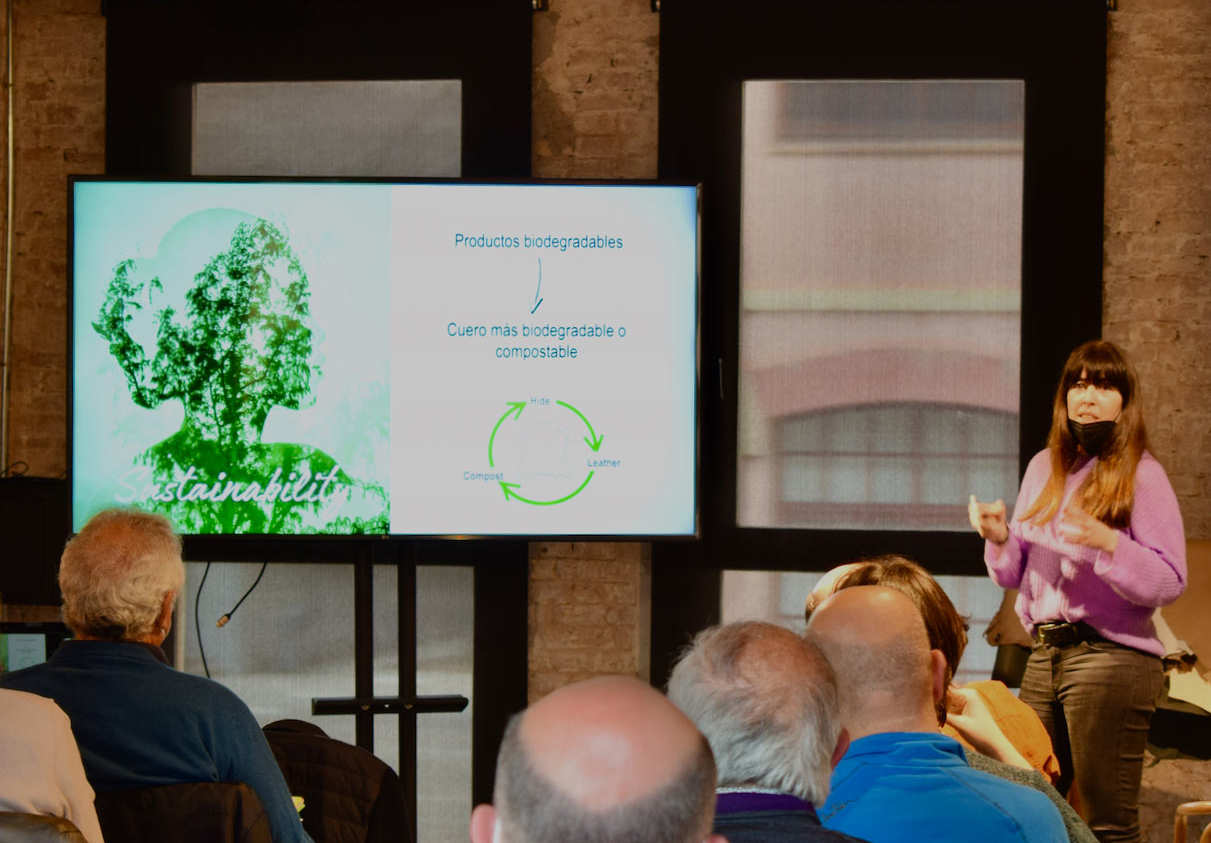
On February 28th, the Leather Cluster Barcelona organized a round table on the biodegradability of leather at the Adoberia Bella in Igualada.

The day generated great interest among the leather industry, bringing together more than 40 people. The event was welcomed by Jordi Vidal, Executive Director of Leather Cluster Barcelona, ​​who thanked the audience and the participation of the speakers for reflecting on one of the major current issues in the leather sector.

Before starting the round table and as an introduction to it, Vidal explained the project that the Puma brand will carry out next May in Germany. Puma will test its biodegradable sneakers on 500 people. They are expected to wear the shoes for six months and then return them to Puma, which will test their biodegradability in the controlled environment of an industrial composting plant.

The speakers then presented different projects and initiatives to expand knowledge about the biodegradability of leather and to assess how biodegradable and compostable leather is compared to other materials.

The round table consisted of:

  • Anna Bacardit from (A3 Leather Innovation Center)
  • Olga Ballús (Chromogeny)
  • Salvador Esquerra (Quimser)
  • Jordi Escabros (Trumpler)
  • Michael Costello (Stahl)

During the interventions of the different speakers, such interesting topics were discussed as the definitions of biodegradability and compostability, what conditions and requirements a leather must meet to be perfectly compostable, the importance of time as a key parameter when talking about biodegradability or differences in biodegradability and compostability of natural leather and treated leather.

The presentation of different business experiences on biodegradability also helped to reflect from the point of view of the motivations of consumers when making their purchases: are buyers just looking for sustainability?

The day ended with an open debate among the attendees in which the importance of the cluster being able to lead and drive a project on the biodegradability of leather with different companies and agents of the value chain of the leather industry. A project that can provide information and value to estimate with scientific rigor in what conditions and time limits are biodegradable and compostable different leather types and what comparative differences we find in terms of biodegradability between leather and synthetics and new materials.

Leather Cluster Barcelona is an environment of competitive cooperation to promote transversal and transformative strategic projects with the aim of boosting the ecosystem of the Catalan leather sector. The cluster is an accredited entity within the Catalonia Clusters program and has the support of ACCIÓ.

You can read the original content HERE.